Open subject

Climate

54 concise entries connecting climate to daily life, history and the wider world.

54 entriesPage 2 of 3Context and sources

In this room

Follow the subject sideways.

Cards are connected by subject and by mood. Move through the complete sequence below, or cross into a neighbouring part of the archive.

23Drive
23Stillness
52Wonder
Q1783
WonderOcean

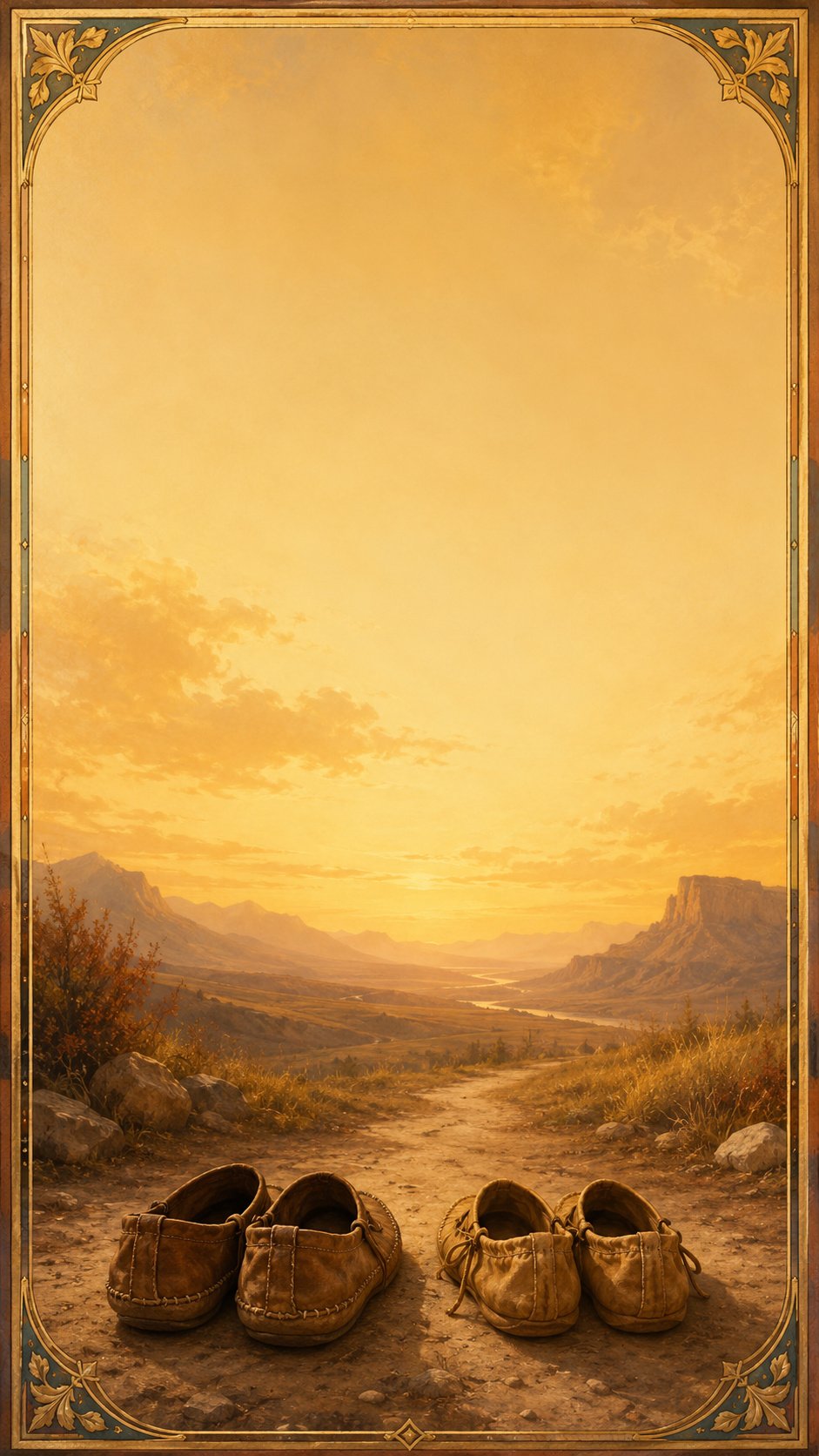
The whale pump describes how whales recycle nutrients through feeding, diving, migration and waste, helping stimulate phytoplankton at the ocean surface.

A whale is not only an animal in the ocean; it is part of the ocean's circulation of fertility. By feeding at depth, breathing at the surface and migrating across vast distances, whales move nutrients into sunlit waters where phytoplankton can grow. This does not turn conservation into a simple carbon calculator, but it deepens the picture: a living creature can be climate infrastructure.

Q1786
WonderTrade

The Incense Route carried frankincense and myrrh from southern Arabia toward the Mediterranean, supporting Nabataean towns, forts and water systems across harsh desert landscapes.

The Incense Route is a reminder that luxury has infrastructure. Aromatic resins burned in temples and homes moved by camel caravan over vast distances, but the route only worked because people mastered wells, cisterns, caravanserais, forts and desert agriculture. What looked like fragrance at the end of the journey was also planning, risk and climate knowledge stretched across stone and sand.

Q1791
WonderMigration

Grand Teton pronghorn migrate up to about 150 miles between summer and winter ranges, following ancient corridors now challenged by roads, fences and development.

Pronghorn are built for speed, but migration asks for more than running. They need gaps beneath fences, safe road crossings, open sagebrush and the memory of routes older than modern property lines. Conservation here is not only about protecting a species in one scenic place. It is about keeping the sentence of the landscape unbroken enough for a herd to finish reading it.

Q1792
WonderMigration

South Africa's sardine run sends vast shoals north along the coast during winter cool-water conditions, drawing dolphins, gannets, sharks, seals and whales into one marine spectacle.

The sardine run is oceanography becoming theatre. A temporary corridor of cooler water lets sardines surge along South Africa's east coast, and the food web notices. Dolphins herd, gannets dive, sharks slice through the shoals and whales arrive at the commotion. Scientists still debate the full logic of the run, which makes it more interesting: even abundance can be a question in motion.

Q1796
WonderEvolution

C4 photosynthesis evolved independently many times, concentrating carbon dioxide inside leaves and helping plants such as maize and sorghum thrive in hot, bright conditions.

C4 photosynthesis is biochemical architecture. Instead of accepting the wastefulness of ordinary photosynthesis under heat and low carbon dioxide, C4 plants evolved a way to concentrate CO2 around the enzyme that fixes it. The pathway appeared repeatedly in different plant lineages, which makes it an evolutionary refrain. Some of humanity's most productive crops carry that refrain in every leaf.

Q1801
DriveEngineering

Hoover Dam was built in the Black Canyon during the Great Depression to control floods, store water in Lake Mead and generate hydroelectric power for the American Southwest.

Hoover Dam is heroic and complicated at the same time. It turned flood risk into power, irrigation security and urban growth, while also binding a river to political promises and ecological consequences. The concrete is impressive, but the real lesson is larger: infrastructure does not simply solve nature. It creates a new relationship with it, and that relationship has to be managed for generations.

Q1809
WonderArchaeology

Skara Brae in Orkney is a remarkably preserved Neolithic settlement with stone-built houses, passageways and furniture, part of the Heart of Neolithic Orkney World Heritage Site.

Skara Brae is intimate archaeology. Its houses are not only outlines on the ground; they hold beds, hearths, dressers and passageways in stone. A storm revealed the village in 1850 after centuries under sand, and what emerged was domestic life at a scale the body understands. The past here is not distant grandeur. It is a room, a fire, a shelf, a neighbour through the wall.

Q1812
WonderNature

The saiga antelope's enlarged, flexible nose helps filter summer dust and warms and humidifies bitterly cold winter air before it reaches the lungs.

Across the Eurasian steppe, summer can mean choking dust and winter can turn each breath into an assault. The saiga's improbable nose answers both conditions before air enters the body. Evolution has made climate control visible here: a soft, mobile structure that looks theatrical because the environment is uncompromising.

Q1817
StillnessNature

Biological soil crusts are living communities of cyanobacteria, lichens, fungi, mosses and algae that bind dryland soil and influence water and nutrient cycles.

What looks like bare earth can be a slow-built alliance only millimetres high. Cyanobacterial filaments and other organisms stabilize particles, alter infiltration and help make nutrients available. A single footprint or tyre can undo years of construction, making the crust a lesson in ecological scale: the smallest architecture may be holding the whole surface together.

Q1818
StillnessNature

Cloud forests capture suspended droplets on leaves and branches; this intercepted fog can drip to the ground and become a significant water input.

Rain is not the only way water falls. In high, wind-facing forests, leaves, mosses and epiphytes comb tiny droplets from moving cloud, gathering them into heavier drops that reach soil and streams. Remove the canopy and the loss is double: trees disappear, and so does part of the landscape's apparatus for making water visible.

Q1819
WonderNature

In serotinous lodgepole pines, resin can keep cones sealed until intense heat melts it, releasing stored seeds onto a newly opened, ash-rich landscape.

Fire is catastrophe at one timescale and opportunity at another. Some lodgepole pines hold viable seeds in resin-sealed cones high in the canopy; heat releases them when competitors have been cleared and sunlight reaches the ground. Not every tree or stand uses the strategy, which is precisely the point: evolution keeps multiple answers ready for an uncertain fire regime.

Q1831
WonderOcean

During diel vertical migration, vast numbers of marine animals rise toward surface waters at night to feed, then descend before daylight, moving carbon into the deep.

Zooplankton, fish and other swimmers follow darkness upward and retreat from visual predators at dawn. Seen by sonar, their movement forms a shifting layer once mistaken for the seafloor. This daily commute is ecological infrastructure: bodies eat carbon near the surface and carry some of it downward through respiration, waste and predation.

Q1832
StillnessOcean

Marine snow is a continuous fall of organic particles—plankton remains, mucus, faecal pellets and other debris—from upper waters into the deep sea.

Far below photosynthesis, food arrives from another world. Flakes aggregate as they sink, becoming meals, habitats and vehicles for carbon; most are consumed or decomposed before touching bottom, while a small fraction joins the sediment. The deep ocean is not sealed away from the sunlit surface—it receives its aftermath particle by particle.

Q1837
WonderOcean

Coccolithophores are single-celled phytoplankton covered in intricate calcium-carbonate plates, linking microscopic life to ocean chemistry and the global carbon cycle.

Each coccolith is a mineral sculpture assembled at a scale too small for the naked eye. In great blooms, billions of cells can turn ocean water milky turquoise and become visible from space. Their photosynthesis takes up carbon while calcification and sinking reshape its route, making a microscopic shell-builder part of a planetary accounting system.

Q1838
WonderOcean

The Antarctic Circumpolar Current flows uninterrupted around Antarctica, connecting the Atlantic, Pacific and Indian oceans while transporting heat, nutrients and carbon.

At southern latitudes, no land bridge blocks an eastward path around the globe. Driven by powerful westerly winds and density differences, the current isolates Antarctica even as it links ocean basins. It is both boundary and exchange: a moving ring that helps set the climate of a continent and carries signals through the world ocean.

Q1839
WonderOcean

Polynyas are persistent areas of open water or thin ice where thick sea ice is expected, maintained by winds that remove ice or by heat rising from the ocean.

A polynya may look like an absence, but it can be a biological centre. Open water exchanges heat and moisture with the atmosphere, forms dense salty water as new ice grows, and gives seals, whales and seabirds access through the frozen surface. Wind or ocean heat keeps reopening the space—a dynamic exception with consequences far below it.

Q1843
WonderOcean

Coastal upwelling occurs when winds drive surface water offshore and colder, nutrient-rich water rises to replace it, supporting exceptionally productive food webs.

Sunlit surface water can run short of nutrients because life consumes them. Along certain coasts, wind and Earth's rotation move that water aside, allowing deeper reserves to rise into the light and ignite plankton growth. Many great fisheries gather around this vertical circulation, which also makes them sensitive to changes in wind, temperature and oxygen.

Q1844
WonderClimate

Atmospheric rivers are long, narrow corridors that transport immense amounts of water vapour, often delivering major rain or mountain snow when forced upward over land.

The name is metaphor, but the transport is physical and enormous. Winds concentrate tropical and subtropical moisture into a moving ribbon; mountains lift the air, cool it and wring out rain or snow. Atmospheric rivers can refill reservoirs and build snowpack, or cause destructive floods—the same delivery system, judged by strength, duration and where it lands.

Q1845
WonderClimate

Milankovitch cycles—changes in orbital shape, axial tilt and wobble—alter the seasonal and geographic distribution of sunlight and help pace long-term glacial cycles.

Eccentricity, obliquity and precession unfold over tens to hundreds of thousands of years. Their importance lies less in changing total sunlight than in redistributing it by latitude and season, especially affecting whether northern snow survives summer. They explain ancient climate pacing; they do not explain the rapid modern warming driven by greenhouse gases.

Q1846
StillnessClimate

Varves are paired seasonal sediment layers, often one annual unit, that can be counted and analysed to build precisely dated records of environmental change.

Seasonal changes in runoff, biology and ice cover can lay down contrasting sediment, one layer after another, without later disturbance. Researchers count the couplets like tree rings and sample their grains, pollen and chemistry. A lake bed becomes both clock and archive: time is not merely inferred from the mud; in favourable basins, it is visibly stacked.

Q1847
WonderClimate

Yedoma is ice-rich Pleistocene permafrost built largely from wind-blown silt, preserving old organic carbon that becomes vulnerable to decay when the ground thaws.

During cold, dry Pleistocene conditions, dust, plant matter and great wedges of ground ice accumulated across Siberia and Alaska. Freezing slowed decomposition, locking carbon into sediment for tens of thousands of years. Thaw turns preservation into exposure: microbes regain access, landscapes slump, and an ancient store can re-enter the active carbon cycle.

Q1848
DriveClimate

Marine heatwaves are sustained periods of unusually high ocean temperature that can reorganize habitats, food webs, fisheries and species ranges.

A hot day at sea is not enough; the anomaly must persist relative to the local season and climate. During a marine heatwave, kelp forests can collapse, coral can bleach and mobile species can move while fixed communities endure the stress. The temperature eventually falls, but ecological recovery may take years—or return a different ecosystem.

Q1849
WonderClimate

Saharan dust crosses the Atlantic carrying phosphorus, replacing some nutrients washed from Amazon soils and linking two distant ecosystems through the atmosphere.

Winds lift mineral particles from North Africa—especially ancient lake sediments—and carry them thousands of kilometres west. Rain removes phosphorus from highly weathered Amazon soils; arriving dust replaces a portion of that loss. The forest is not simply fed by the desert, but the exchange reveals a larger truth: ecosystems have atmospheric neighbours far beyond the horizon.

Q1850
StillnessClimate

Speleothems such as stalagmites preserve layered chemical and isotopic records that can be dated to reconstruct past rainfall and environmental change.

Water filters through soil and rock, carrying dissolved minerals and a chemical trace of conditions above. Drop by drop, a stalagmite grows layers whose isotopes, trace elements and dates can reveal shifting rainfall and vegetation. The cave does not preserve weather like a photograph; it translates the surface into stone slowly enough for centuries to become measurable.